Wuthering Waves Beginner’s Guide: Rover, Resonators and Open-World Basics
Rover, Resonators, Union Level, SOL3 Phase, Waveplates, traversal, parries and Echoes: the essentials for new Wuthering Waves players.
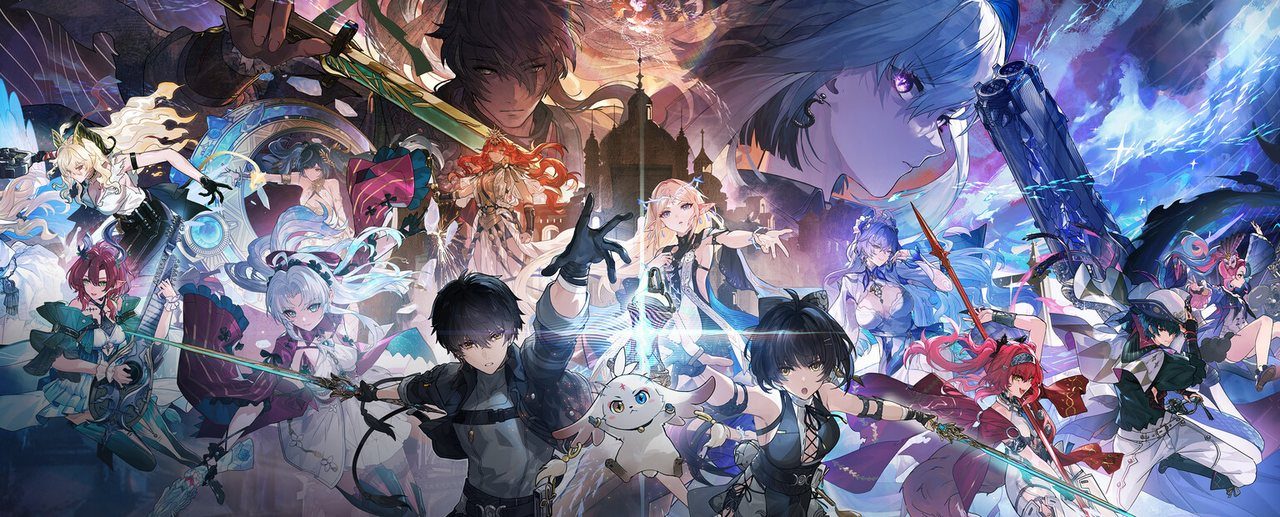
Wuthering Waves is an open-world action gacha game from Kuro Games, a studio based in Guangzhou. It is often compared to Genshin Impact because of its open world and character-collecting structure, but it plays quite differently: combat is faster and leans on parries and character swaps, traversal is built for speed, and a creature-capturing system called Echoes sits at the center of character building. This guide explains what you need to know before starting: platforms and ratings, the premise, the key progression numbers, movement, combat and Echoes at a high level, and what to focus on first.
Platforms, Release Dates and Age Rating
Wuthering Waves launched on May 22–23, 2024 (depending on time zone) for Windows, Android and iOS. A PlayStation 5 version followed on January 2, 2025, macOS support arrived in March 2025, and an Xbox Series X|S version was released in July 2026. The game is free to download, and your progress lives on a Kuro Games account that can be used across platforms; paid currency can be tied to the platform where it was bought.

The ESRB rates Wuthering Waves Teen, with an “In-Game Purchases (Includes Random Items)” notice. PEGI ratings can vary between storefront listings, so check the page for your region. If gacha terminology is new to you, our explainer on what a gacha game is covers the basics.
The launch was rough: early versions had performance issues and bugs, and Kuro Games publicly apologized and handed out compensation. Many of those problems were addressed in later patches, so reviews written in the first weeks do not necessarily reflect today’s game.
The Premise: Rover, Solaris-3 and the Lament
The game takes place on Solaris-3, a world recovering from a catastrophe called the Lament, which nearly wiped out humanity and unleashed monsters known as Tacet Discords. You play as Rover, an amnesiac who wakes up with unusual abilities and no memory of the past. You can choose a male or female Rover. Along the way, you meet Resonators, people who have awakened powers tied to the Lament, and they become your playable characters.
The story moves across distinct nations. It begins in Huanglong, a region with Chinese-inspired architecture and politics, then continues to Rinascita, a Mediterranean-styled region introduced with version 2.0, and later to Lahai-Roi in version 3.0. The main antagonists, a group called the Fractsidus, see a final “True Lament” as necessary for humanity’s evolution.
Union Level, SOL3 Phase and Waveplates
Wuthering Waves uses its own names for familiar progression systems.
Union Level
Union Level is your account level. You raise it with Union EXP from quests, exploration, daily activities and spending stamina. Higher Union Levels unlock features, quests and challenges. If the next main quest is locked, the answer is usually a few more Union Levels.
SOL3 Phase
SOL3 Phase is the world difficulty tier, comparable to World Level in Genshin Impact or Equilibrium Level in Honkai: Star Rail. It increases at set Union Levels, often after completing an ascension challenge, and each step makes enemies tougher and improves the rewards from bosses and challenges. If fights suddenly get harder, check whether your SOL3 Phase went up recently, then spend time leveling characters and weapons.
Waveplates
Waveplates are the stamina currency. Exploring, story quests and open-world fights cost nothing; Waveplates are spent to claim rewards from repeatable activities, such as Simulation Challenges for EXP and Shell Credits (the basic currency), Forgery Challenges for weapon materials, Tacet Fields for Echo-related rewards, and boss challenges. They regenerate at one point every six minutes, which adds up to 240 per day. When you are capped, extra regeneration flows slowly into a storage pool of Waveplate Crystals, so a missed day is less costly. Crystal Solvents restore 60 Waveplates each; they are handed out as rewards, and premium currency can buy refills, which is rarely worthwhile.
Traversal: Built for Speed
Movement is one of Wuthering Waves’ strongest features. Rover can sprint, wall-run up surfaces, use a grappling hook at marked points, dodge in mid-air and glide. Later versions added more: version 2.0 introduced a flight module in Rinascita, and version 3.0 brought an Expedition Motorbike to Lahai-Roi.

For a new player, the practical tip is to unlock teleport points (Resonance Nexuses and Resonance Beacons) as you explore, and to learn the grapple points early. The world opens up quickly once you stop walking and start chaining wall runs into glides.
Combat: Swaps, Parries and Counters
Combat is real-time with a team of three Resonators. You control one at a time and switch between them. Each Resonator has a basic attack, a Resonance Skill, a Resonance Liberation (an Ultimate-style move) and a Forte, a unique mechanic that differs per character.
Intro and Outro skills
Switching is more than a convenience. As a character builds Concerto Energy, swapping them out triggers an Outro skill, and the incoming character enters with an Intro skill. Chaining these swaps is how teams deal their best damage and apply buffs.
Dodging and parrying
Well-timed dodges trigger a counterattack opportunity, and many enemy attacks flash to signal that they can be parried with a precise counter. Parrying is the skill that most separates struggling players from comfortable ones. You can complete the story without mastering it, but practicing on regular enemies makes bosses far more manageable. A December 2025 update added a further layer for interrupting enemies, so combat has continued to evolve with new versions.
Attributes
Resonators use one of six attributes: Glacio, Fusion, Electro, Aero, Spectro and Havoc. Rover can switch between attributes unlocked through the story. Unlike Genshin Impact, there are no elemental reactions; attributes matter mainly for buffs, team synergy and enemy resistances.
Echoes at a High Level
Echoes are Wuthering Waves’ signature system. When you defeat many enemies, they can leave behind an Echo, a captured version of that creature, which you absorb into your collection. Echoes serve two purposes:
- Equipment: each Resonator equips several Echoes, which provide stats and set bonuses. Each Echo has a cost of 1, 3 or 4, and a Resonator can equip Echoes up to a total cost of 12.
- Abilities: the main Echo grants an active skill, letting your character summon or transform into the captured creature for an attack.
Echoes come in different rarities and have random secondary stats, so the system can absorb a lot of time in the endgame. The Data Bank tracks your collection and, as it levels up, improves the quality of Echoes you can obtain. Early on, absorb everything you defeat to fill the Data Bank, equip Echoes with sensible main stats, and leave optimization for later.
Convenes: Know the Rules Before You Pull
Convenes are the game’s gacha pulls. The featured Resonator banner has a published 0.8% base rate for 5-star results and guarantees a 5-star within 80 pulls, with a 50/50 split between the featured Resonator and the standard pool. The featured weapon banner also guarantees a 5-star within 80 pulls. Our guide to pity systems explains how counters and guarantees work. The main story is playable with free Resonators, including Rover and allies who join through quests, so there is no need to pull early.
What to Focus On in Your First Weeks
- Follow the main quest. It unlocks regions, systems and free characters.
- Unlock teleports and learn traversal. Efficient movement makes everything else faster.
- Do daily activities. A short daily checklist rewards premium currency and Union EXP.
- Fill the Data Bank. Absorb new Echo types as you meet them.
- Build one team of three. Focus materials on a main damage dealer and two characters who support them.
- Practice parries. Use ordinary fights to learn the timing before bosses demand it.
Common Beginner Mistakes
- Rushing Union Level without leveling characters. SOL3 Phase rises and enemies outscale your team.
- Never switching characters. Intro and Outro skills are a big share of a team’s strength.
- Over-investing in early Echoes. Higher SOL3 Phases give better ones; heavy upgrades on early Echoes are often wasted.
- Feeling pressured by banner timers. Limited characters can return in reruns, and skipping keeps your pity.
- Treating endgame as mandatory. Challenge modes are optional, and the story does not require them.
Quick FAQ
Is Wuthering Waves connected to Genshin Impact?
No. It is made by a different studio, Kuro Games, and has its own world and story. The two games share a genre and a business model, not a setting.
Do I need to master parrying to finish the story?
No. Dodging, sensible team building and leveling are enough for the main quest. Parrying becomes more valuable in optional challenges and tougher boss fights, which is why it is worth practicing early when the stakes are low.
What should I do when Waveplates are full?
Spend them on whatever your main team needs, usually character EXP or weapon materials early on. If you cannot log in, the overflow storage softens the loss, and missing a day does not lock you out of any content.
Can I change Rover’s attribute?
Yes. Once the story unlocks more than one attribute for Rover, you can switch between them, which makes Rover a flexible fit for different teams.
Decide before you start whether you will spend money at all; zero is a perfectly valid choice. Wuthering Waves rewards practice and exploration, and the most satisfying improvements, cleaner parries, smoother swaps, faster traversal, cost nothing.