Honkai: Star Rail Beginner’s Guide: Turn-Based Gacha Basics
Premise, turn-based combat, Trailblaze and Equilibrium Levels, Trailblaze Power and the Departure Warp: what new Honkai: Star Rail players should know.
Honkai: Star Rail is HoYoverse’s take on the turn-based RPG: a space-faring adventure with a train full of eccentric companions, a strong sense of humor and a combat system that rewards planning rather than reflexes. It is also a gacha game, with randomized “warps” for characters and equipment. If you have been curious but unsure where to begin, this guide covers the essentials: platforms and ratings, the premise, how combat works, the two progression levels, the stamina system, and what to focus on in your first weeks.
Platforms, Price and Age Rating
Honkai: Star Rail launched on April 26, 2023 for Windows, iOS and Android, and arrived on PlayStation 5 on October 11, 2023. A PlayStation 4 version was announced early on but has been indefinitely delayed. Genshin Impact and Zenless Zone Zero have both come to Xbox Series X|S, but Honkai: Star Rail has followed its own schedule, so check the official site for the current platform list before you buy a device with this game in mind.
The game is free to download. Progress is tied to a HoYoverse account, so you can usually continue the same save on PC and mobile; paid currency may be tied to the platform where it was bought.
The ESRB rates Honkai: Star Rail Teen, with an “In-Game Purchases (Includes Random Items)” notice that flags the gacha system. PEGI ratings in Europe vary by storefront listing, so check the store page for your region. If you are new to the genre, our explainer on how gacha games work covers the basics.
The Premise: The Astral Express and the Trailblazer
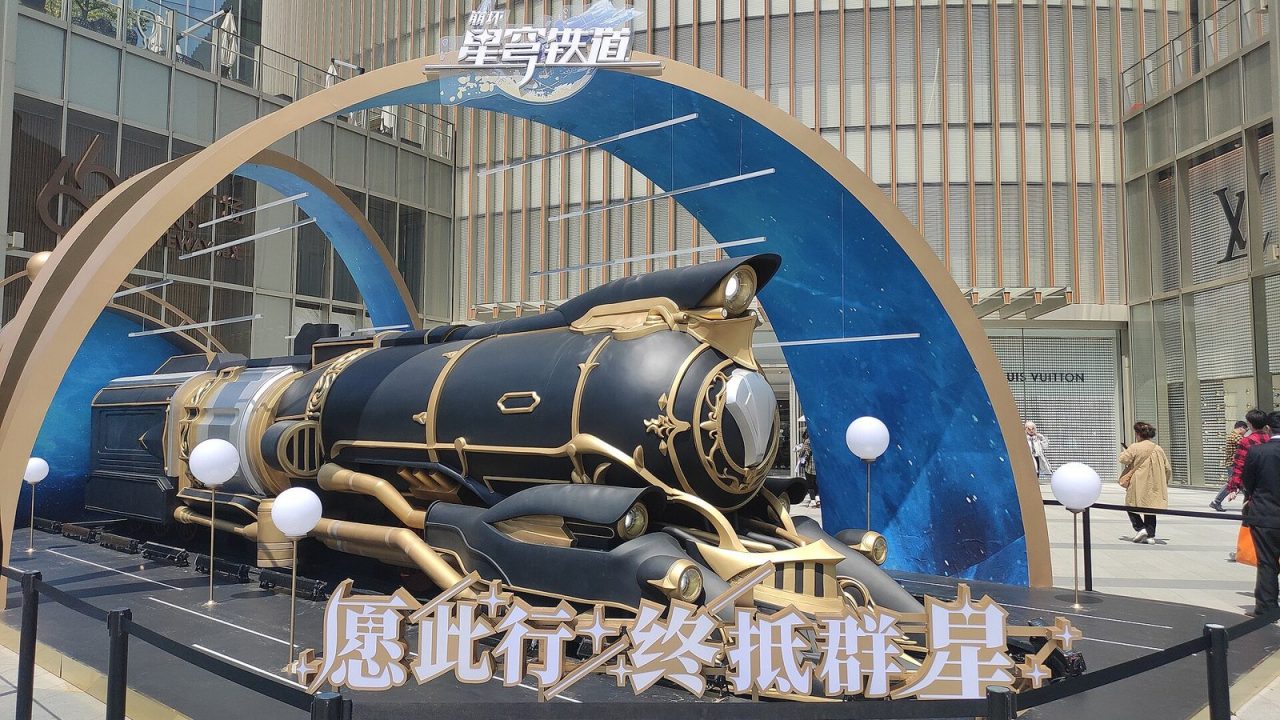
You play as the Trailblazer, a character who wakes up with no memory and a Stellaron, a dangerous cosmic object described as a “cancer of all worlds”, sealed inside their body. You can choose a male or female version (Caelus or Stelle). Early on, you meet March 7th and Dan Heng and join the crew of the Astral Express, a train that travels between worlds and follows the “Trailblaze”, an old path through the stars.
The story unfolds world by world, beginning on the Herta Space Station and the frozen planet Jarilo-VI, and continuing to later destinations such as the Xianzhou Luofu and Penacony. Each world has its own cast, factions and long story arc. The tone shifts easily between serious drama and comedy, and the writing leans on the idea of the Aeons, god-like beings who each embody a philosophy or “Path”.
Honkai: Star Rail shares the “Honkai” name with HoYoverse’s earlier Honkai Impact 3rd, and some characters and themes echo it, but it is a separate story. You do not need to have played anything else to follow it.
Turn-Based Combat at a Glance
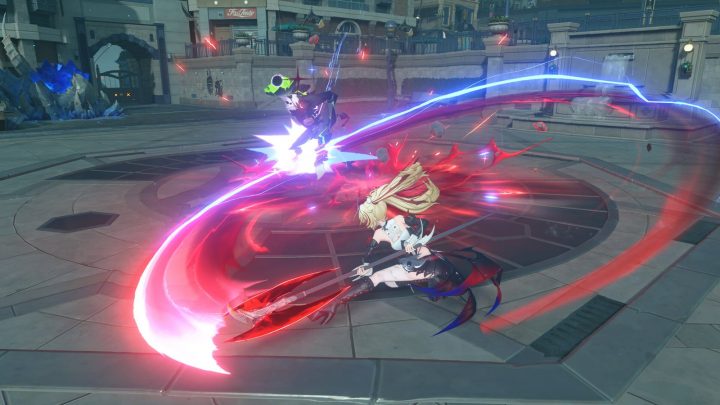
Battles use a team of up to four characters against waves of enemies. The order of turns is shown on the left side of the screen and is determined by each unit’s Speed: faster characters act more often.
Basic Attacks, Skills and the Skill Point pool
On each character’s turn, you usually choose between a Basic Attack and a Skill. Skills are stronger but cost Skill Points, which are shared by the whole team. Basic Attacks generate Skill Points, Skills spend them, and the pool has a small cap. Managing that shared pool, deciding who spends and who saves, is the core puzzle of the combat system.
Ultimates and Energy
Characters build Energy by acting and taking hits. When Energy is full, their Ultimate can be used immediately, even outside their normal turn. Timing Ultimates well is one of the most satisfying parts of the game.
Combat types, Weakness and Toughness
Every character has one of seven combat types: Physical, Fire, Ice, Lightning, Wind, Quantum and Imaginary. Enemies show which types they are weak to and have a Toughness bar. Hitting an enemy with a type it is weak to reduces Toughness; emptying the bar triggers a Weakness Break, which delays the enemy’s next action, deals extra damage and applies an effect that depends on the type used. For a beginner, the lesson is simple: bring a mix of types and target weaknesses.
Paths
Each character also follows a Path, which defines their role: damage dealers, supports who buff allies, debuffers, healers and shielders. A balanced early team usually includes one or two damage dealers, a support or debuffer, and someone who heals or shields.
Techniques and auto-battle
In the overworld, each character has a Technique that can be used before a battle starts, for example to strike first or apply a buff. Auto-battle and a speed-up option are also available, which makes repeating easy content quick.
Trailblaze Level and Equilibrium Level
Your account progression is tracked by Trailblaze Level. You earn Trailblaze EXP from story missions, daily training, spending stamina and modes like the Simulated Universe. Higher Trailblaze Levels unlock features, missions and modes.
Equilibrium Level is the game’s difficulty and reward tier for the world. It rises through special Trial of Equilibrium missions that become available at set Trailblaze Levels (20, 30, 40, 50, 60 and 65 according to widely used community guides). Each new Equilibrium Level makes enemies stronger and increases the quality and quantity of rewards. If you notice fights getting harder, it is usually because your Equilibrium Level went up, and it is time to level characters and equipment.
Trailblaze Level can be capped until you complete the next trial, so if your EXP bar stops filling, look for a Trial of Equilibrium mission in your list.
Trailblaze Power: The Stamina System
Trailblaze Power is Honkai: Star Rail’s stamina. Exploring, playing the story and fighting overworld enemies are free; Trailblaze Power is spent on repeatable stages that reward upgrade materials:
- Calyxes for character EXP, Light Cone EXP, credits and Trace (skill) materials.
- Stagnant Shadows for character ascension materials.
- Caverns of Corrosion for Relics, the equippable gear with random stats.
- Echoes of War, weekly boss challenges with a limited number of reward claims.
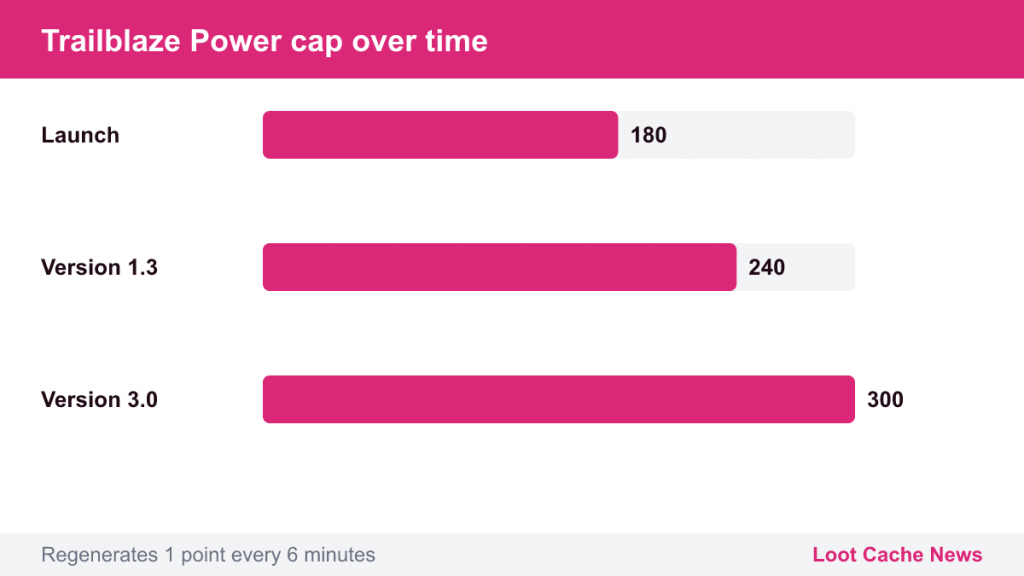
Trailblaze Power regenerates at one point every six minutes. The cap was 180 at launch, rose to 240 in version 1.3 and to 300 in version 3.0. Version 1.3 also added Reserved Trailblaze Power, an overflow pool that fills slowly when your main bar is full, so occasional missed days are less punishing. Refills can be bought with premium currency; for most players they are not worth it, and normal daily play is enough.
The Starter Warp and Your First Characters
Warps are Honkai: Star Rail’s gacha pulls. New accounts have access to the Departure Warp, a one-time beginner banner limited to 50 warps that guarantees a 5-star character from a set pool within those 50 warps, with discounted multi-warps. After that, you have the permanent Stellar Warp and rotating limited banners for characters and Light Cones (equipment). Every banner lists its rates and rules on a details page, and our guide to pity systems explains what those numbers mean.
The story also gives you characters for free: the Trailblazer, March 7th and Dan Heng join at the start, and several more 4-star characters arrive through story missions and early rewards. That roster can clear the main story. You do not need to pull at all to progress, and there is no penalty for saving currency until you understand which characters you enjoy.
What to Focus On in Your First Weeks
- Follow the Trailblaze Missions. The main story unlocks most features, including daily training, the Simulated Universe and new worlds.
- Do Daily Training. A short list of daily tasks gives premium currency and EXP. It takes a few minutes.
- Explore for chests and puzzles. Each map has a completion tracker, and treasure chests give premium currency and materials.
- Build one team of four. Pour materials into one main damage dealer and the characters that support them, rather than leveling everyone equally.
- Level Light Cones and Traces. An underleveled Light Cone or ignored Traces will hold a character back more than missing Relics.
- Leave Relic perfection for later. Relics matter in endgame modes. Early on, equip whatever has decent main stats and move on.
- Try the Simulated Universe. This roguelite mode is a fun way to learn how Paths and buffs interact, and it gives weekly rewards.
Common Beginner Mistakes
- Using Skills every turn. Draining the shared Skill Point pool leaves your supports unable to act. Let some characters Basic Attack.
- Ignoring Speed. Turn order is everything; a slightly faster support can make the whole team act more efficiently.
- Bringing a single combat type. Without matching weaknesses, enemy Toughness barely moves.
- Spending Trailblaze Power without a plan. Decide which character you are building and farm their materials first.
- Feeling pressured by banners. Limited characters often return in later reruns, pity counters carry over, and skipping costs nothing.
A Game That Rewards Patience
Because combat is turn-based and auto-battle exists, Honkai: Star Rail is easy to fit into short sessions: log in, finish Daily Training, spend Trailblaze Power and continue the story when you have more time. Endgame challenges like Memory of Chaos and Pure Fiction exist for players who want them, but none of them are needed to enjoy the story. Decide in advance whether you will spend money at all, and remember that zero is a valid answer. The full story, every world and most events are open to free players.