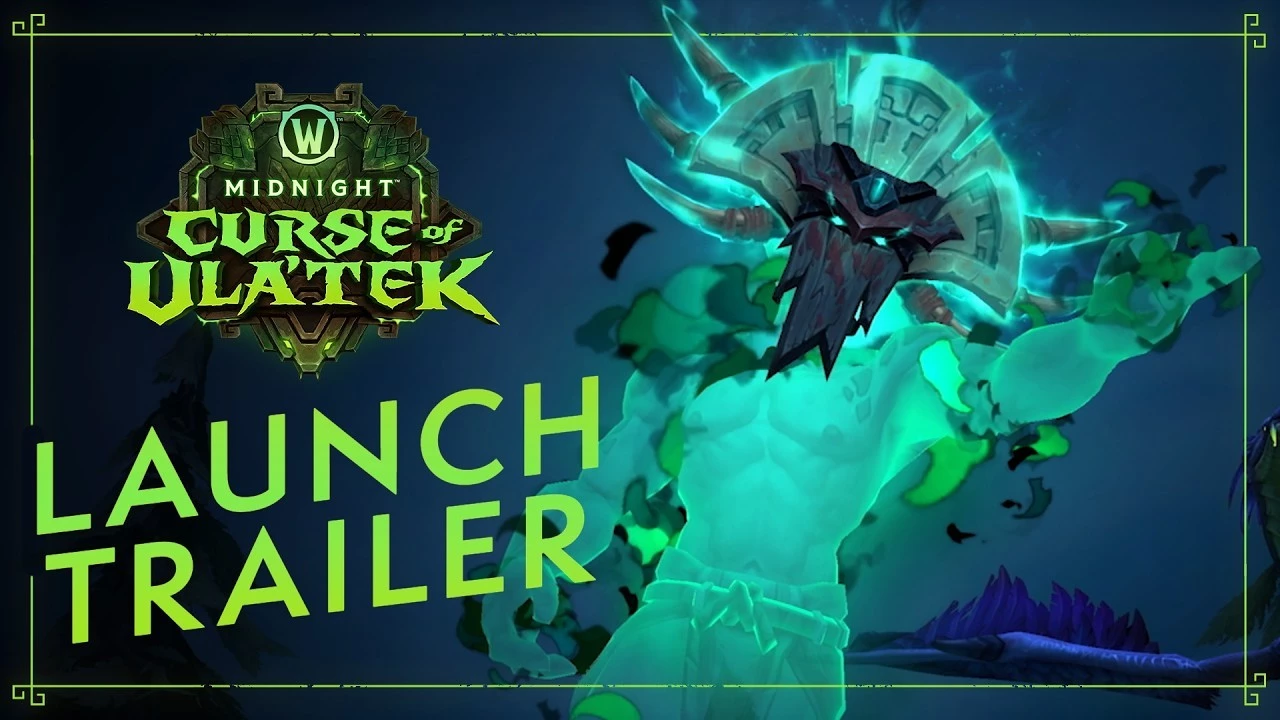
Blizzard Entertainment has rolled out an urgent hotfix addressing the Ula’thek encounter in World of Warcraft’s latest raid content, “The Poisoned Void.” The emergency adjustment specifically targets the Normal and Heroic difficulty versions of the fight, focusing on the problematic “Spectral Rings” ability that was causing significant issues for larger raid groups. This rapid response from the development team highlights Blizzard’s ongoing commitment to maintaining balanced and enjoyable raid experiences for the millions of players engaging with World of Warcraft’s endgame content.
The Spectral Rings mechanic, which requires players to navigate through rotating rings of damaging energy while managing other boss abilities, was scaling disproportionately in raids with higher player counts. Groups running with 20 or more players found the encounter significantly more punishing than intended, with the overlapping rings creating nearly unavoidable damage scenarios. This type of scaling issue is a common challenge in World of Warcraft’s flexible raid system, which allows groups anywhere from 10 to 30 players to tackle Normal and Heroic content.
Understanding the Flexible Raid Scaling Challenge
World of Warcraft’s flexible raid system, introduced during the Mists of Pandaria expansion, dynamically adjusts boss health, damage output, and mechanic frequency based on the number of players present. While this system has been largely successful in allowing guilds of various sizes to experience raid content, certain mechanics can inadvertently become more difficult at specific player thresholds. The Spectral Rings issue with Ula’thek represents a classic example of this phenomenon, where the geometric complexity of overlapping ring patterns created exponentially harder scenarios for larger groups rather than linearly scaling difficulty.
Veteran raiders and theorycrafters within the community had been documenting these issues since the raid’s release, providing detailed feedback through official forums and social media channels. The speed of Blizzard’s response suggests the development team was actively monitoring this feedback and recognized the validity of player concerns. Such rapid iteration has become increasingly common in modern World of Warcraft, with the development team deploying multiple hotfixes weekly during active raid tiers.
The Poisoned Void Raid Context
The Poisoned Void raid represents one of the latest challenges in World of Warcraft’s current expansion, featuring a variety of bosses that test different aspects of player coordination and individual skill. Ula’thek, as one of the encounters within this raid, incorporates mechanics that emphasize spatial awareness and group coordination. The boss fight requires players to balance damage output with careful positioning, making the Spectral Rings ability a central challenge of the encounter. Prior to the hotfix, many guilds were resorting to running smaller raid sizes specifically for this fight, which contradicted the intended flexibility of the raid system.
Blizzard has historically maintained a responsive approach to raid tuning, particularly in the weeks following new content releases. The company’s approach typically involves gathering data from thousands of attempts across all difficulty levels, combined with direct player feedback, to identify encounters that fall outside intended difficulty parameters. This data-driven methodology has evolved significantly since the early days of World of Warcraft raiding, when balance changes could take months to implement.
Impact on the Raiding Community
The raiding community has largely welcomed the quick response from Blizzard, with many guild leaders expressing relief that their larger roster groups can now progress through the encounter as intended. Competitive guilds pushing for server-first achievements and those in the Race to World First scene closely monitor such changes, as they can significantly impact progression strategies. For more casual raid groups, the fix means less frustration and more consistent progression, which is essential for maintaining player engagement throughout a raid tier.
Looking ahead, players can expect continued monitoring and adjustment of The Poisoned Void encounters as more data becomes available from Mythic difficulty clears. Blizzard typically releases additional balance passes in the weeks following a raid’s launch, fine-tuning damage numbers, ability timings, and mechanical interactions based on observed player performance across all skill levels. The Ula’thek adjustment serves as a reminder of the complex balancing act required to create challenging yet fair raid content for World of Warcraft’s diverse player base.
Expert Opinion: This hotfix demonstrates Blizzard’s improved responsiveness to raid balance issues compared to previous expansion cycles. The Spectral Rings scaling problem highlights the inherent complexity of designing mechanics for flexible raid sizes, and we can expect similar adjustments throughout this raid tier as guilds push into Mythic difficulty. Moving forward, the development team will likely implement more rigorous internal testing for mechanics that involve geometric patterns or environmental hazards in large-group scenarios.