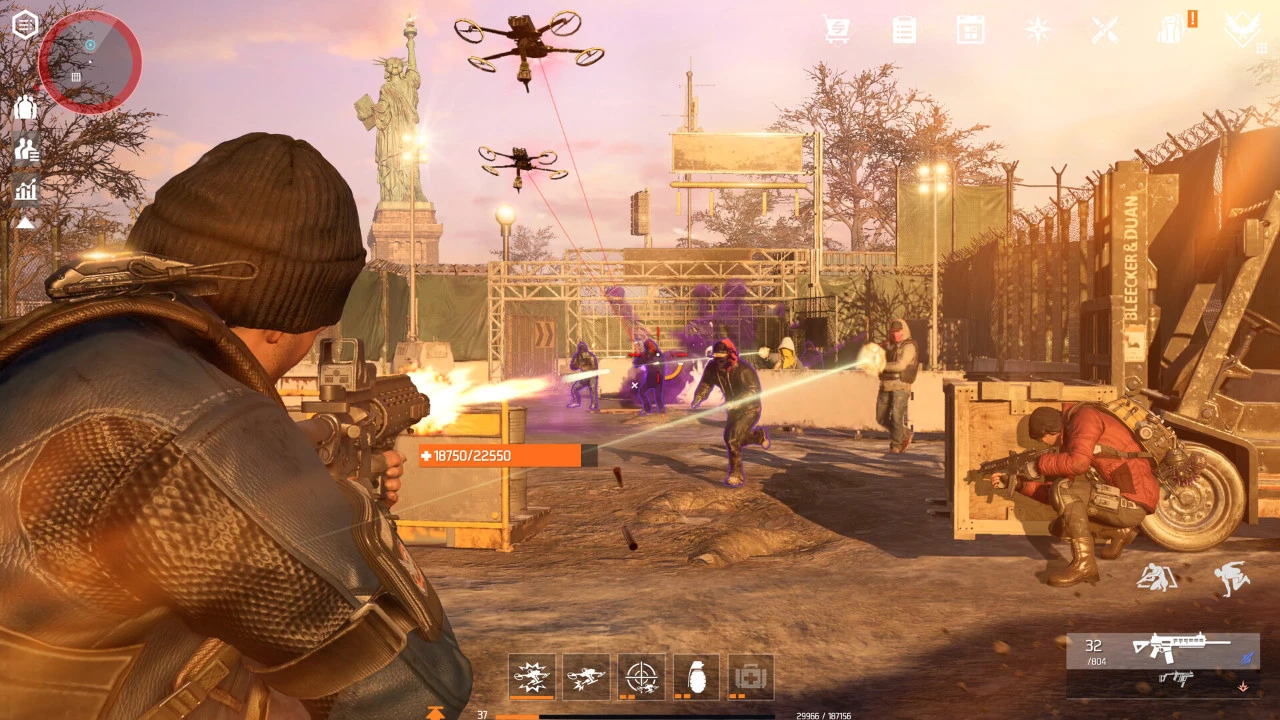
The Division Resurgence has officially launched on PC through Steam and Ubisoft Connect, but the release has been met with an overwhelmingly negative reception from players. The free-to-play mobile spin-off of Ubisoft’s popular looter-shooter franchise attempted to expand its reach to desktop platforms, only to face a barrage of criticism and dislikes that has cast a shadow over what the publisher hoped would be a triumphant expansion of the franchise.
The game, which was originally developed as a mobile title, appears to have struggled in its transition to the PC gaming market, where players typically have higher expectations for graphics, controls, and overall polish. Steam reviews quickly filled with complaints about various aspects of the game, from monetization practices to performance issues and gameplay mechanics that feel out of place on a desktop platform.
A Troubled Entry into the PC Market
The Division Resurgence was first announced in 2022 as a free-to-play mobile game set in the same universe as The Division and The Division 2. The game promised to bring the tactical shooter experience to smartphones and tablets, featuring an open-world New York City setting with familiar gameplay elements. However, the decision to port this mobile-first experience to PC appears to have backfired significantly. PC gamers have historically shown resistance to mobile ports that don’t adequately adapt to the platform’s capabilities and expectations.
The negative reception highlights a growing trend in the gaming industry where publishers attempt to maximize revenue by bringing mobile titles to PC and console platforms without making substantial modifications. This approach often results in games that feel like they belong on neither platform, featuring simplified mechanics for mobile while lacking the depth and technical excellence PC gamers demand.
Ubisoft’s Ongoing Challenges
This launch troubles come at a particularly difficult time for Ubisoft, which has faced numerous challenges in recent years. The French gaming giant has seen several high-profile releases underperform, leading to stock price declines and ongoing speculation about the company’s future direction. The publisher has been increasingly focused on live-service games and free-to-play models, a strategy that has produced mixed results across their portfolio.
The Division franchise itself has had a complicated history. The original game launched in 2016 to strong initial sales but faced criticism for its endgame content and technical issues. The Division 2, released in 2019, was generally better received by critics but struggled to maintain its player base over time. The decision to create a mobile spin-off was seen as an attempt to capture a new audience and generate ongoing revenue through microtransactions.
What This Means for the Franchise
The poor reception of The Division Resurgence on PC raises questions about the future direction of the franchise. Ubisoft has not yet officially commented on the negative reviews, though the company will likely monitor the situation closely in the coming weeks. The gaming community will be watching to see whether the publisher addresses player concerns through patches and updates or if this release will be quietly abandoned.
For fans of The Division series, this launch serves as a reminder of the risks involved when publishers prioritize platform expansion over quality adaptation. While mobile gaming continues to grow as a market, the expectations and preferences of mobile and PC gamers remain fundamentally different, making successful cross-platform releases a significant challenge for even the largest development studios.
Expert Opinion: This failed PC launch exemplifies a concerning industry pattern where publishers underestimate the distinct expectations of different gaming platforms. Ubisoft’s aggressive push into free-to-play territory appears to be eroding consumer trust, and unless the company pivots toward quality-focused releases rather than platform-maximizing strategies, we may see continued decline in their market position throughout 2025.