
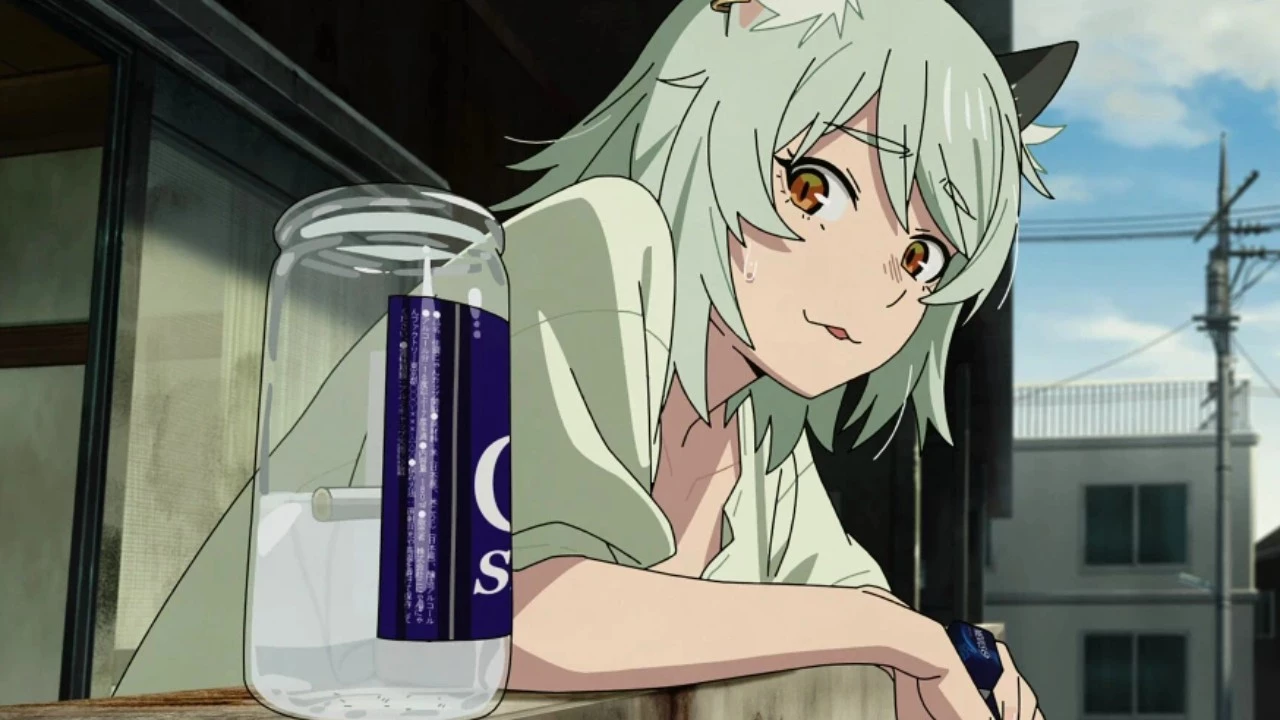
Japan’s Broadcasting Ethics and Program Improvement Organization (BPO) recently reviewed complaints regarding a late-night comedy anime series that depicts the coexistence of humans and beast-people. The regulatory body convened to discuss viewer concerns about scenes showing smoking and what some interpreted as the use of prohibited substances. After careful deliberation, the ethics council determined that no violations of broadcasting standards had occurred, allowing the series to continue airing without modifications.
The anime in question, which appears to be the series colloquially referred to as “Tabakoshka” by viewers, airs during Japan’s late-night anime block — typically between 11 PM and 3 AM. These time slots are specifically designated for mature content that may not be suitable for younger audiences, giving creators more freedom to explore adult themes including violence, sexuality, and substance use. The complaint centered on depictions of characters smoking and potentially using other substances, which some viewers found inappropriate even for late-night programming.
Understanding Japan’s Broadcasting Oversight System
The BPO serves as Japan’s primary self-regulatory organization for broadcasting content, established in 2003 through a merger of previous oversight bodies. Unlike government censorship agencies, the BPO operates independently and is funded by broadcasting companies themselves. The organization reviews viewer complaints and can issue recommendations ranging from minor advisories to formal requests for program modifications. However, it lacks the legal authority to force broadcasters to remove content, instead relying on industry cooperation and public pressure to enforce standards.
Japan has a complex relationship with depicting smoking in media. While the country has implemented increasingly strict anti-smoking regulations in public spaces, particularly ahead of the 2020 Tokyo Olympics, depictions of smoking in anime and manga remain relatively common. Historical and period pieces frequently show characters smoking, and it has traditionally been used as a character trait to suggest sophistication, stress, or rebelliousness. However, growing health consciousness has led some anime studios to voluntarily reduce or modify smoking scenes, particularly in content aimed at younger audiences.
The Special Status of Late-Night Anime
Late-night anime occupies a unique position in Japanese broadcasting. These programs are produced with the understanding that viewership will primarily consist of adult anime enthusiasts, many of whom record episodes for later viewing or watch through streaming services. This demographic reality allows creators to tackle mature themes that would be prohibited during prime-time hours. Series airing after midnight frequently contain content involving violence, complex political themes, romantic situations, and yes, substance use — all within an established framework that both broadcasters and regulators accept.
The fantasy setting of the complained-about series — featuring anthropomorphic beast-people living alongside humans — adds another layer to the discussion. Anime and manga have long used fantastical settings to explore real-world issues through allegory, creating distance that can make difficult topics more accessible while also potentially obscuring harmful messaging. The BPO’s decision suggests that the council viewed the depictions as appropriate within the context of the show’s fictional world and late-night time slot, not as promotion of substance use to impressionable viewers.
Broader Context of Anime Content Regulation
This case reflects ongoing tensions in Japanese society regarding media content regulation. While Japan maintains relatively permissive standards for animated content compared to many Western nations, there has been increasing pressure from various groups to implement stricter oversight. International streaming platforms have also complicated the landscape, as content produced for Japanese late-night audiences can now reach global viewers at any hour. Some industry observers note that complaints to the BPO have increased in recent years, though the organization continues to apply its standards consistently, rarely finding violations in content that airs within appropriate time slots and includes proper advisory warnings.
The decision to clear the anime of any wrongdoing reinforces the existing framework that has governed Japanese broadcasting for decades. By maintaining the distinction between content appropriate for different time slots rather than implementing blanket restrictions, the BPO has signaled that creative freedom in late-night programming will continue to be protected — provided creators and broadcasters adhere to the established guidelines regarding scheduling and audience advisories.
Expert Opinion: This ruling demonstrates Japan’s mature approach to content regulation, where context and scheduling take precedence over reflexive censorship. As streaming platforms continue to blur traditional broadcasting boundaries, regulators worldwide may need to develop more sophisticated frameworks that balance creative freedom with viewer protection, rather than relying solely on time-based restrictions that lose meaning in an on-demand viewing environment.